Commercial lighting rebates are not going away. But they are changing fast.
In 2026, rebate programs are shifting focus.
Utilities want bigger energy savings, smarter systems, and measurable results.
For businesses, this creates both opportunity and urgency.
Why Lighting Rebates Still Matter
Lighting upgrades are one of the easiest ways to reduce energy use.
Rebates make those upgrades easier to justify and can cover a large portion of project costs.
That means:
- Lower upfront cost
- Faster return on investment
- Immediate energy savings
Trend 1: LED-to-LED Upgrades Are Growing
For years, rebates focused on replacing outdated lighting.
Now, the focus is shifting again. Many facilities have already upgraded to LED.
But those early systems are no longer the most efficient.
In 2026, more rebate programs now allow LED-to-LED upgrades. In fact, about 22% more programs explicitly support these projects.
Newer LED technology can deliver up to 50% better efficiency than older systems. This creates a new wave of opportunity.
If your lighting upgrade happened years ago, it may already be outdated.
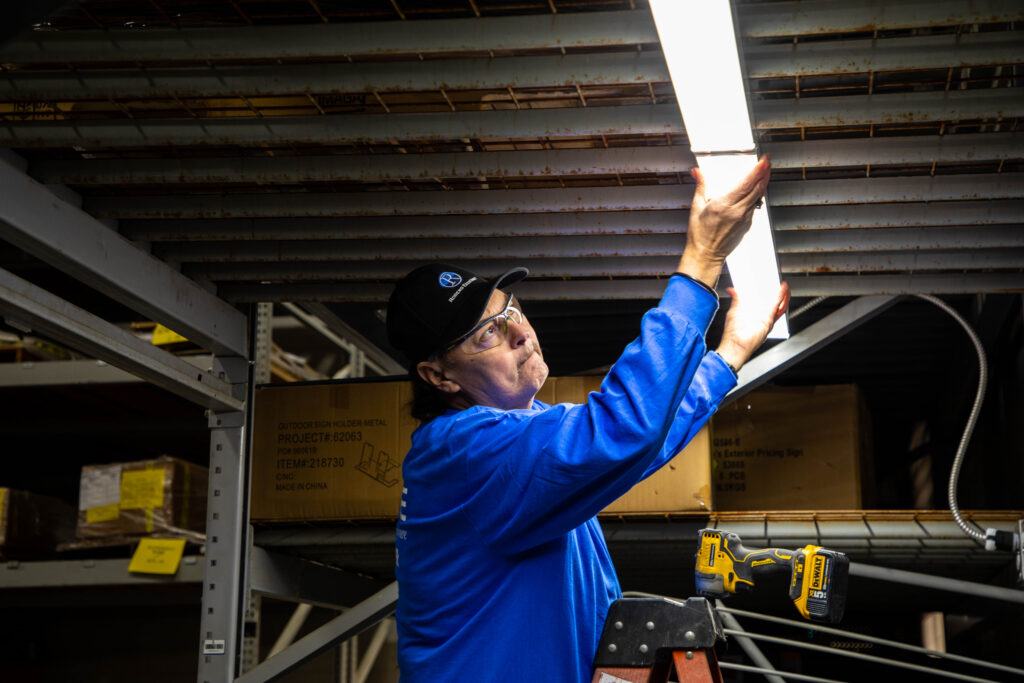
Technician installing LED lighting in a warehouse to improve visibility, increase energy efficiency, and support commercial lighting rebate incentives.
Source: Rogers Electric
Trend 2: Fluorescent Rebates Are Disappearing
The industry is moving away from fluorescent lighting. Fast.
Several states have already implemented bans or restrictions. And rebate programs are following that shift.
Some programs are already getting rid of rebates for fluorescent replacements.
What this means:
- Fewer incentives for outdated technologies
- Shorter timelines to take advantage of rebates
- More pressure to upgrade now
If a facility is still using fluorescent lighting, the window is closing.
Trend 3: Lighting Controls Are Becoming Required
Lighting is no longer just about fixtures. Controls are becoming a major focus.
In 2026, more rebate programs are prioritizing:
- Networked lighting controls (NLC)
- Luminaire-level lighting controls (LLLC)
- Smart automation systems
Rebates for these systems continue to grow, with more programs offering simplified, per-fixture incentives.
In some cases, controls are required to qualify for rebates at all. This shift is simple.
Utilities want deeper energy savings. Controls make that possible.
Trend 4: Incentives Are Based on Energy Savings
Rebate structures are evolving.
Older programs paid per fixture.
Newer programs focus on performance.
Utilities are now rewarding:
- Watts reduced
- kWh savings
- Overall system efficiency
Instead of just replacing equipment, projects must show real impact.
This changes how projects are planned.
Design matters more.
Engineering matters more.
Execution matters more.
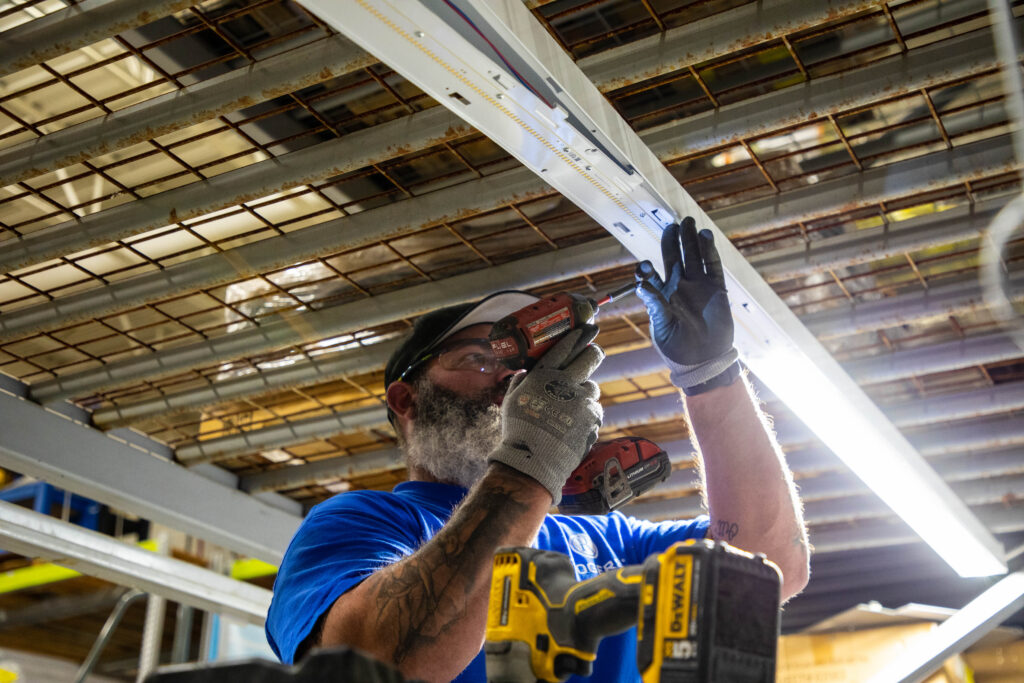
Electrician installing an energy-efficient LED lighting system in a commercial facility to reduce power usage and qualify for utility rebates.
Source: Rogers Electric
What This Means for Commercial Projects
Lighting rebates are still available across most of the U.S.
The strongest lighting rebate programs are typically found in states like Massachusetts, New Jersey, New York, and California.
Programs vary by:
- State
- Utility provider
- Project scope
- Technology used
They also change often.
Delays can mean missed opportunities.
Planning early is now part of the process.
How to Maximize Lighting Rebates in 2026
To get the most out of available incentives:
Start early
Rebates often require pre-approval before work begins.
Focus on efficiency
Projects that reduce energy the most see the highest incentives.
Include controls
Smart systems are becoming standard.
Verify eligibility
Not all programs clearly list what qualifies.
Move quickly
Programs can change or expire without notice.
Why This Matters Now
The lighting industry is entering a new phase.
Most facilities already made the first upgrade to LED.
Now, the focus is on optimization.
Better systems.
Smarter controls.
Higher efficiency.
Rebates are evolving to match that shift.
Businesses that move now will capture the most value.
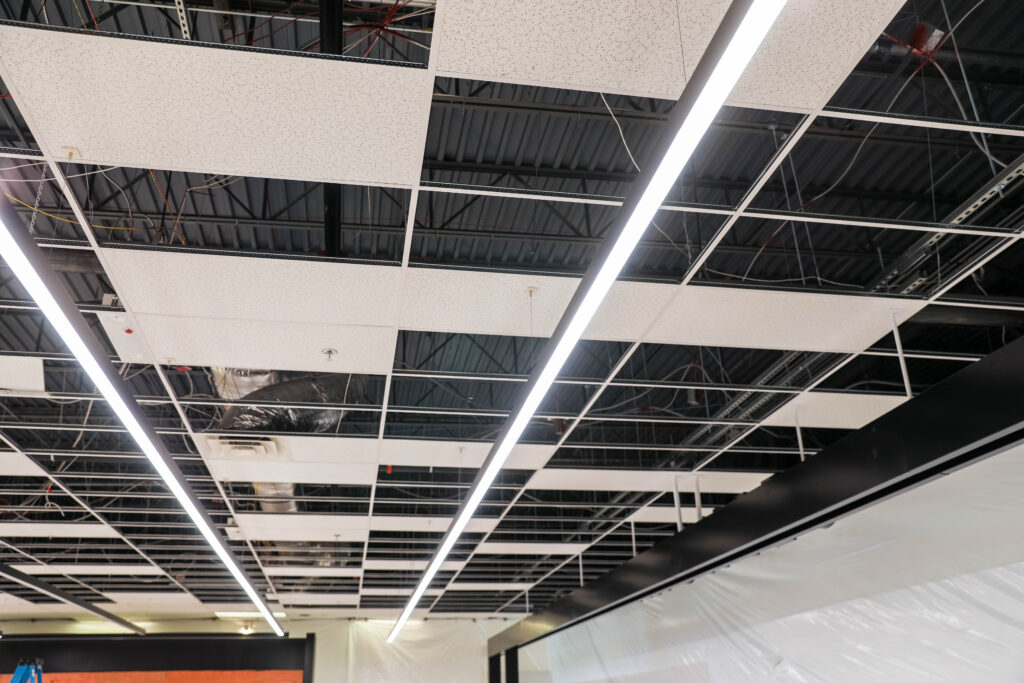
Commercial lighting retrofit with linear LED fixtures and open ceiling infrastructure designed for energy savings and lighting rebate programs.
Source: Rogers Electric
The Bottom Line
Lighting rebates in 2026 are still strong. But they are more strategic than ever.
The biggest opportunities are no longer basic upgrades.
They are:
- LED-to-LED improvements
- Smart lighting systems
- Energy-driven projects
The companies that plan ahead will benefit the most.
Ready to Upgrade Your Lighting System?
Rebates can significantly reduce project costs. But timing and planning matter.
Working with the right team ensures you:
- Identify available incentives
- Design for maximum savings
- Execute efficiently across every location
Ready to plan your next upgrade?
Schedule a consultation with our lighting team today.