Smart Building Systems: Everything Businesses Need to Know
Smart building technology helps businesses improve efficiency, reduce energy use, and automate building operations through connected systems.
Read More
The construction industry is changing fast. Projects are larger, schedules are tighter, and electrical systems are more complex than ever before.
Across the United States, businesses want to build faster without giving up safety or quality. One approach is becoming more common across commercial construction. Prefabrication.
Crews build conduit, panels, and other electrical parts on site. Instead of assembling everything in the field, teams build many electrical components off-site in controlled environments. Teams deliver these pre-fab electrical systems ready for installation. This shift is improving efficiency, consistency, and reliability across modern projects.
At Rogers Electric, we see this shift every day. Owners and developers want smarter ways to build. They want less risk and better results. Prefab now plays a key role in how teams plan electrical work.
Prefabrication means teams build electrical parts off-site before they reach the jobsite. These parts include conduit, panels, and other electrical components crews usually build on site.
By moving this work into a shop, teams gain more control. They focus on accuracy and quality. Teams build assemblies using standard steps, label them clearly, and prepare them for installation. When crews bring them to the jobsite, they install them instead of building them from scratch.
Prefabrication also helps teams stay organized. Materials arrive ready to use instead of piled on site. Crews spend less time searching for parts and more time installing them. This keeps projects moving and reduces delays.
Prefab does not cut corners, it helps teams deliver better electrical work safely.
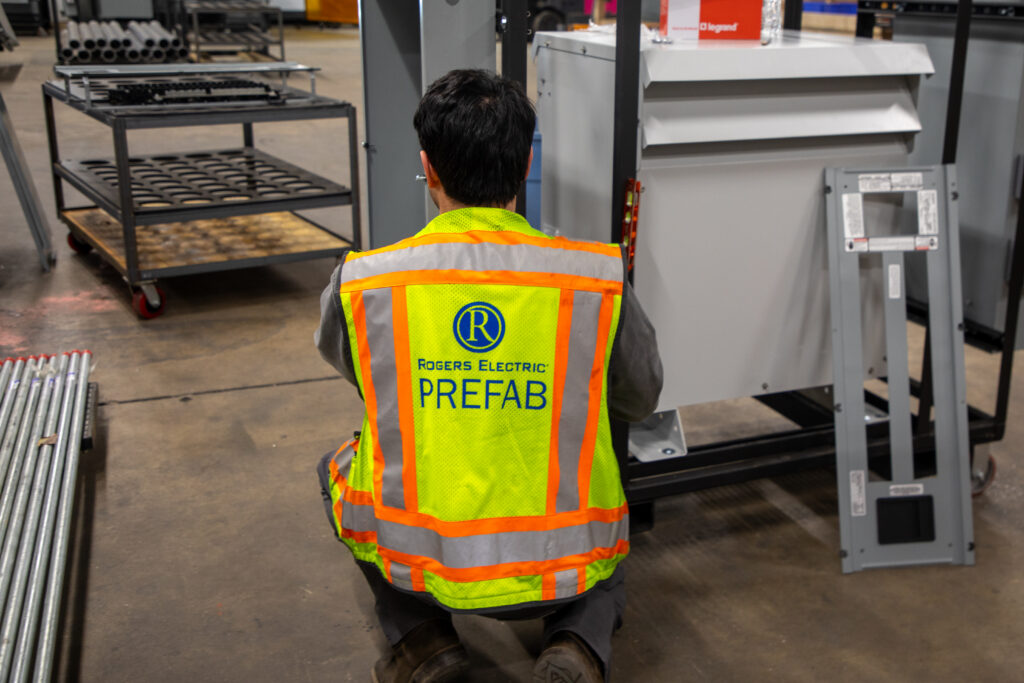
Electrician assembling pre-fab electrical systems in a controlled prefabrication shop environment.
Several factors are driving the move toward prefabrication.
First, skilled electricians are in high demand. Job sites often have many trades working at the same time. Prefabrication helps teams use skilled labor better by moving complex work into a dedicated shop.
Second, project schedules continue to shrink. Many projects cannot afford delays caused by weather, material staging, or crowded jobsites. Pre-fab electrical systems reduce on-site work and help teams stay on schedule.
Third, off-site work improves safety. Controlled environments reduce hazards and limit crowded work in active construction areas.
Together, these factors make prefabrication a smart choice for modern electrical projects.
Electrical project efficiency is not just about speed. Teams must also do the work right the first time.
Prefabrication improves efficiency in clear ways:
Because teams prepare parts ahead of time, they reduce rework and avoid surprises. Installations move faster and results become more predictable.
Electrical project efficiency improves when teams spend less time reacting and more time installing.
One of the biggest advantages of prefabrication is quality control.
Teams build, inspect, and test electrical assemblies in a controlled environment before they reach the field. They check connections, review layouts, and complete paperwork early. This approach helps teams avoid problems late in the project.
When assemblies arrive ready to install, field crews focus on placement and connections. This reduces punch-list items and helps projects move smoothly toward completion.
Quality control improves when teams review work before it reaches the jobsite.
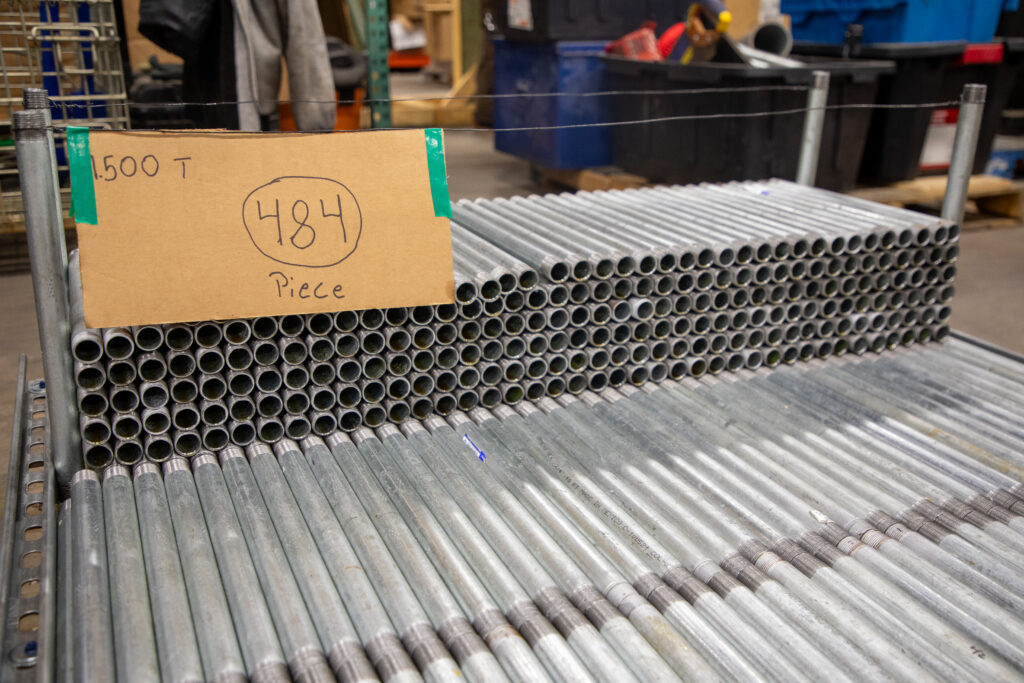
Prefabricated electrical conduit organized and labeled for efficient installation and jobsite delivery.
Prefabrication supports many types of projects. It delivers the most value where work is complex or repeated.
Common examples include:
In these settings, teams use the same designs and assemblies across locations. Prefabrication helps teams keep work consistent from project to project.
Not all prefabrication programs deliver the same results.
Strong prefab programs require experience, coordination, and a clear understanding of jobsite conditions. When choosing an electrical partner, owners should look for teams that:
The right partner makes prefabrication easier, not harder.
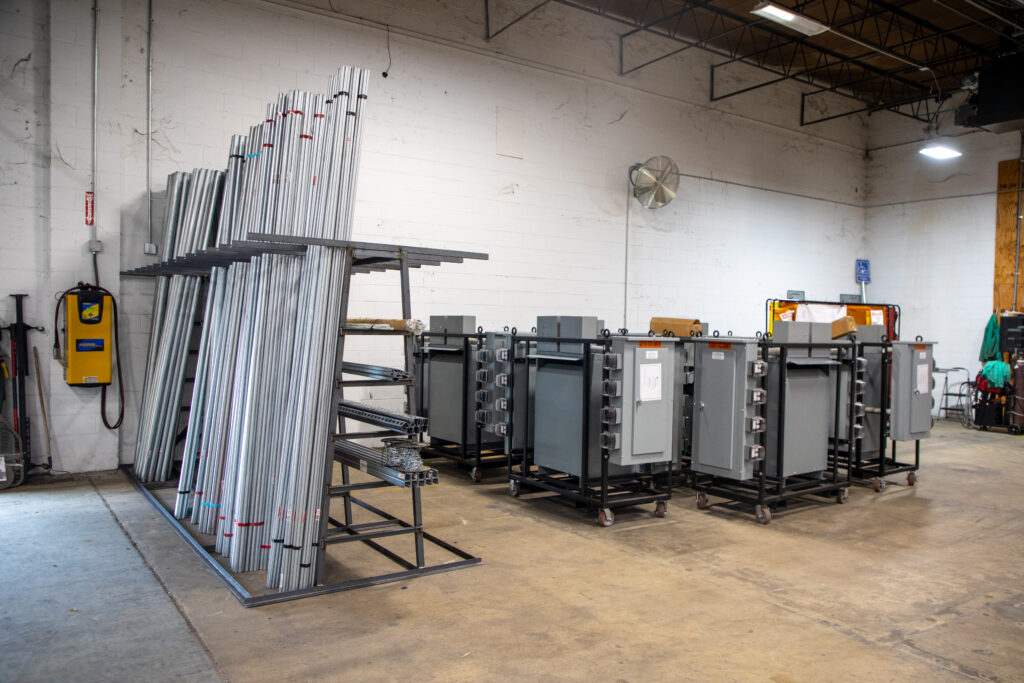
Pre-fab electrical assemblies and conduit prepared off-site to improve electrical project efficiency.
Prefabrication is no longer a specialty option. Teams now use it as a standard part of construction processes on projects.
As projects grow larger, teams need better efficiency and consistency. Prefabrication helps teams work smarter, reduce risk, and deliver reliable results.
At Rogers Electric, we use prefabrication to support complex projects across the country. Our teams combine planning, off-site work, and on-site installation to deliver results that last.
Teams are changing how they build electrical projects through prefabrication. When done right, it improves efficiency, quality, and schedule certainty.
Rogers Electric is one of many electrical contractors that support commercial projects with prefabricated electrical systems designed for performance and reliability. Contact our team today to learn how prefabrication can support your next large scale construction project.